
Does Consciousness Collapse Reality
A Nobel laureate spent decades arguing it does. Most physicists never forgave him.

On Monday I told you about a man who didn’t recognize his own hand. I told you about blindsight, about a brain processing the world without anyone home to see it. And I promised that physics had something strange to add to all of it.
Today I want to keep that promise. But I have to warn you first, this is going to feel like a detour before it lands. Stay with me.
The Question at the End of the Chain
There is a moment in the history of physics that almost nobody outside the field knows about, and it changes how you read every popular quantum mechanics article afterward.
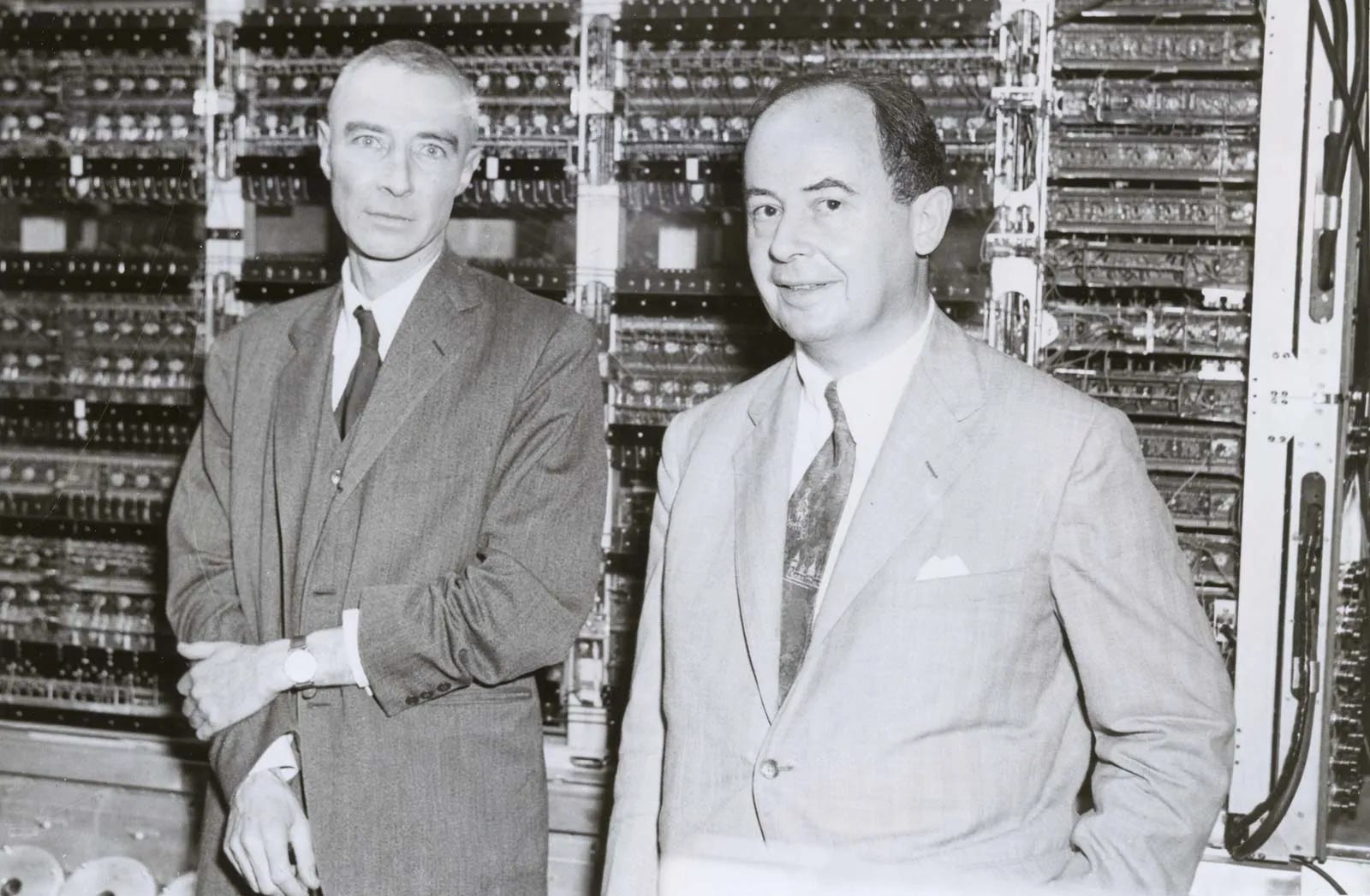
In 1932, the mathematician John von Neumann published a book on the foundations of quantum mechanics. He was, by most accounts, the smartest person in the room of any room he walked into. Other physicists used to joke that he was actually a higher form of intelligence pretending to be human. The book is dense, brilliant, and almost unreadable, but inside it, von Neumann did something nobody else had done. He took the equations of quantum mechanics seriously enough to ask a question everyone else had quietly skipped over.
When does the wave function actually collapse?
To explain why this question matters, I have to give you a quick taste of the problem. If you read my post on quantum interpretations or my eBook, you can skim the next few paragraphs. If you didn’t, here is the version that will get you to the interesting part.
In the world we see, things have positions. The pen on your desk is on your desk. Not maybe on your desk. Not 70% on your desk and 30% in the kitchen. It is sitting there, in one place, one orientation, behaving like a pen.
In the quantum world, this is not how things work. An electron, before you measure it, does not have a definite position. It has a wave function, a mathematical object that describes the probability of finding it in any given location. The electron is genuinely spread out across all those possibilities until something interacts with it. Then, suddenly, it is at one place. The spread collapses to a point. The probability becomes a fact.
This is not philosophy. This is what every quantum experiment we have ever done agrees with. The math that predicts the spread is the most accurate scientific theory in human history. Predictions to fourteen decimal places. Built every computer you have ever used.
But there is a question buried inside the math that the math itself does not answer.
What counts as the “something” that makes the wave function collapse?
Schrödinger’s equation, the master equation of quantum mechanics, is perfectly deterministic. You feed it a wave function, you get back another wave function. Smooth. Continuous. No collapse anywhere in the formalism. The collapse is something physicists added, almost embarrassedly, to make the math match what we observe. Whenever you “measure” the electron, the wave function collapses. Otherwise, it spreads.
But what is a measurement? Is it a photon hitting the electron? Is it the photon being absorbed by a detector? Is it the detector sending an electrical signal to a computer? Is it the computer printing the result on a screen? Is it the screen reflecting light into your eye? Is it your retina? Your optic nerve? Your visual cortex? You, becoming aware of the result?
At which step did the wave function actually collapse?
If you push the question hard enough, and von Neumann did, you realize that every step in that chain is itself a quantum system. The photon is quantum. The detector is made of atoms, which are quantum. So is the computer, the screen, your eye, your brain. If quantum mechanics is universal, and there is no reason to think it is not, then every link in the chain should still be in superposition until something finally collapses it.
So von Neumann followed the chain to its end, and at the end of the chain there was only one thing left.
You!
This Idea That Embarrassed Physics
Von Neumann did not say consciousness collapses the wave function. He said the chain of measurements has no natural stopping point inside physics. Wherever you draw the line is arbitrary. You could draw it at the detector, but the detector is just atoms. You could draw it at the brain, but the brain is just atoms too. The only place where the chain has to end, the only place where superposition is no longer possible, is the moment of conscious awareness, because we never experience superposition. We only experience definite outcomes.
It was Eugene Wigner, a Nobel laureate in physics, who took the next step. In a famous 1961 paper, Wigner argued that von Neumann’s chain pointed to a real conclusion. The thing that finally collapses the wave function is the conscious observer. Mind, in some irreducible sense, is what makes the quantum world definite.
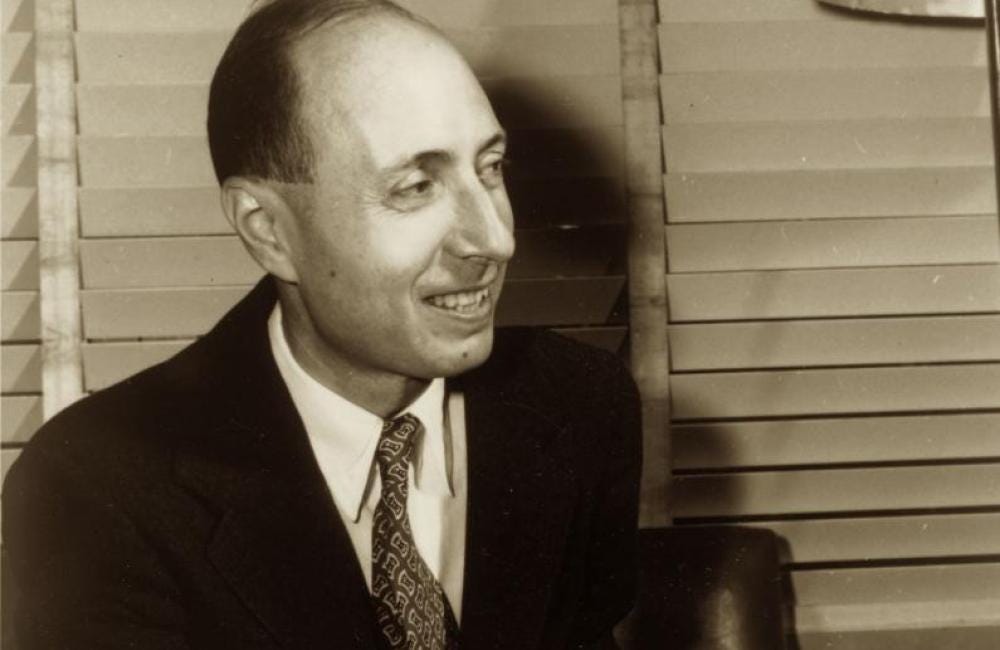
Wigner was not a mystic. He was one of the most rigorous physicists of his generation. He understood symmetries in quantum mechanics so deeply that an entire branch of the field is named after him. And he sat with this conclusion for years before publishing it, because he knew how it would sound.
He was right about how it would sound.
The reaction from most physicists was something between embarrassment and contempt. Quantum mechanics had spent decades trying to climb out of the philosophical mud Bohr and Heisenberg left it in, and here was Wigner dragging it back down. Consciousness?! The theory that built transistors and lasers and the GPS in your phone was supposed to require minds to function?
Most of the field never forgave him. Wigner himself eventually walked back the position late in his life. He came to believe, partly under the influence of new mathematical results, that the consciousness story was probably wrong.
But here is what nobody likes to admit. Nobody has ever proven him wrong. They have just made the question less embarrassing.
What Replaced the Consciousness Story
Keep reading with a 7-day free trial
Subscribe to Physics Gene to keep reading this post and get 7 days of free access to the full post archives.